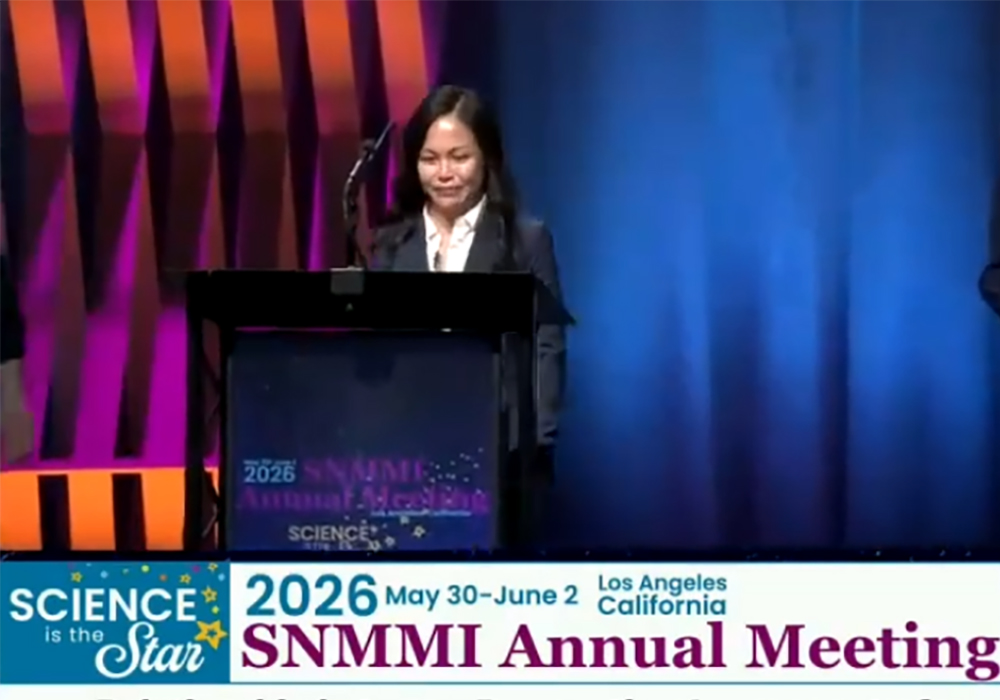
At 8:00 AM on May 31, 2026, the opening ceremony of the Society of Nuclear Medicine and Molecular Imaging (SNMMI) 2026 Annual Meeting officially commenced. This opening ceremony, centered on innovation, quality leadership, and patient-centricity in nuclear medicine, systematically presented the latest breakthroughs, interdisciplinary integration trends, and future strategic directions in the global field of nuclear medicine and molecular imaging. It set the stage for the annual academic event through the president's address, the release of annual abstracts, the presentation of several prestigious awards, and a special keynote lecture.
Dr. Jean-Luc Urbain, President of SNMMI, delivered the opening address. He stated that nuclear medicine has officially entered a new era of exponential growth, driven by the synergistic advancement of imaging diagnostics, targeted therapy, artificial intelligence, precision quantification, clinical trials, and public science outreach. Dr. Urbain emphasized that SNMMI's core mission is to steer the industry's growth towards a responsible, patient-centered, and sustainable development path, exerting synergistic efforts across multiple fronts including therapeutic technologies, imaging data, AI, clinical reimbursement, and infrastructure development.
To ensure the implementation of high-quality innovation, SNMMI is actively advancing the establishment of Centers of Excellence for Radiopharmaceutical Therapy, aiming to extend unified standards to over 100 centers globally. Through registries, clinical guidelines, quality assessment, and industry advocacy, the society is building a safe, standardized, and accessible diagnostic and therapeutic system. Simultaneously, SNMMI actively promotes the empowerment of scientific discovery by artificial intelligence. Leveraging the global platform for radiopharmaceutical clinical trials, it connects patients with clinicians to accelerate access to innovative therapies. Furthermore, SNMMI places high importance on standardization and precision, continuously improving quantitative calibration, equipment certification, and operational protocols to transform innovative technologies into clinically reliable solutions.
Regarding patient service and healthcare equity, Dr. Urbain pointed out that the society is continuously investing in the cultivation of students, residents, researchers, and young leaders by expanding Patient Education Days, launching new digital resources, educational videos, clinical education materials, and online courses for healthcare administrators. It strengthens the talent foundation through various means such as mentorship programs, the Nuclear Medicine University, therapy training, and scholarships. To bridge healthcare disparities, SNMMI promotes mobile PET and mobile SPECT services, enabling patients in remote areas and underserved communities to access high-quality nuclear medicine diagnostics and treatment.
Several highly influential awards in the field were announced and presented during the opening ceremony, honoring scholars and research achievements that have made outstanding contributions to nuclear medicine and molecular imaging.
The Henry N. Wagner, Jr. Annual Abstract Award was granted to Amanda Rose Nguyen from the University of California, Los Angeles (UCLA). Her award-winning research focused on evaluating the correlation between regional brain metabolism assessed by FDG PET imaging and response to anti-amyloid therapy. Studying Alzheimer's disease patients, the prospective cohort analysis demonstrated that FDG PET can effectively differentiate AD from non-AD patients and predict clinical outcomes of anti-amyloid therapy, providing crucial evidence for the precise diagnosis and treatment of Alzheimer's disease.
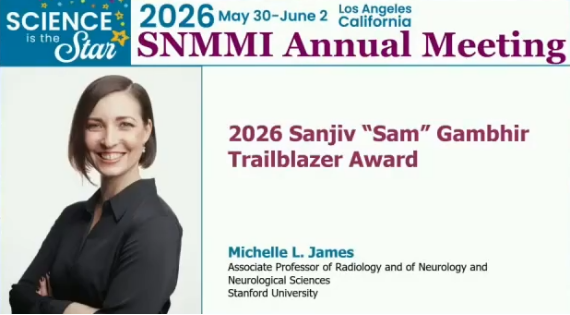
The 2026 Sanjiv "Sam" Gambhir Trailblazer Award was presented to Dr. Michelle L. James. This award recognizes the innovative spirit and collaborative philosophy she has demonstrated in her mid-career. Dr. James has long been dedicated to developing advanced molecular imaging tools and PET imaging probes, achieving internationally recognized results in diagnosing neuroinflammation and neurological disorders (including Alzheimer's disease, chronic fatigue syndrome, etc.), promoting the translational application of imaging technology in the early detection of neurological diseases.
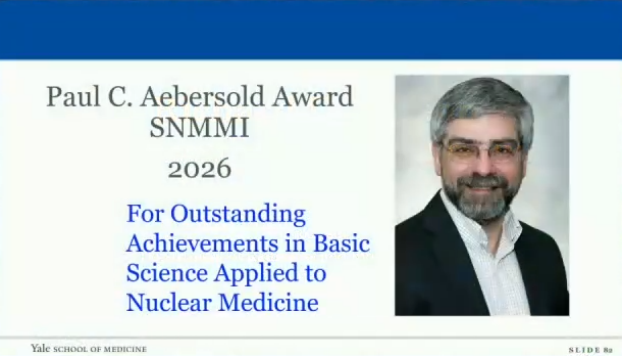
The Paul C. Aebersold Award was conferred upon Dr. Richard E. Carson from Yale University, in recognition of his outstanding achievements in integrating basic science with nuclear medicine. Dr. Carson has dedicated decades to PET image reconstruction algorithms and kinetic modeling methods. The algorithms he led in developing are widely cited. He has also participated in the research, development, and evaluation of over 170 new radiotracers, facilitating the successful translation of several synaptic imaging probes, thereby supporting precise research on various neuropsychiatric disorders such as Alzheimer's disease, Parkinson's disease, and schizophrenia.
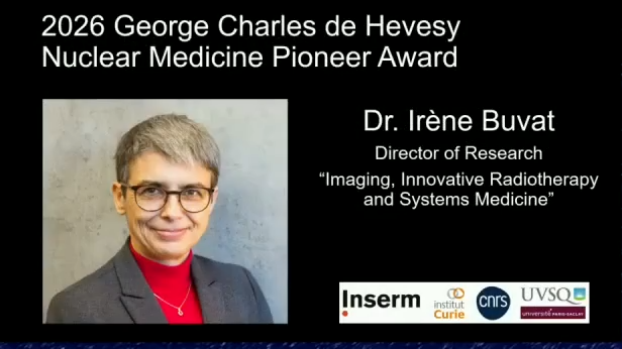
The George Charles de Hevesy Nuclear Medicine Pioneer Award was awarded to Dr. Irène Buvat from the French National Centre for Scientific Research (CNRS). Dr. Buvat is a leader in international quantitative imaging and open-source tool development. She spearheaded the establishment of an interdisciplinary research system encompassing imaging, radiotherapy, and systems medicine. As a core initiator of the global GATE Monte Carlo simulation code collaborative project, she helped establish this tool as a universal standard in the field. She also developed the radiomics software LIFEx, which provides over 311 radiomic feature extraction functions and serves more than 11,000 global users, advancing the development of precision quantification in nuclear medicine through open sharing.
In the special academic session, Dr. Vasken Dilsizian delivered the Henry N. Wagner, Jr. Lecture, systematically reviewing the developmental history of nuclear cardiology. Starting from gated blood pool imaging and K-43 myocardial perfusion imaging in the 1970s, to the clinical application of TI-201 and Tc-99m labeled perfusion agents, and further to the evolution of SPECT and PET technologies, absolute quantification of myocardial blood flow, and FDG metabolic imaging, the lecture highlighted the unique value of nuclear imaging in evaluating myocardial viability, cardiac sarcoidosis, implantable device infections, cardiac amyloidosis, and other conditions. It also the broad prospects of novel probes like FAPI and F-18 flurpiridaz, as well as the vast potential of artificial intelligence in image acquisition, reconstruction, diagnosis, and prognostic stratification.
In his closing remarks, Dr. Urbain stated that the current period represents a golden age for nuclear medicine, with theranostics, artificial intelligence, precision quantification, global collaboration, and equitable healthcare becoming central themes for the industry. SNMMI will continue to collaborate with global societies, international organizations, and government agencies to promote higher quality scientific research, broader access to diagnostics and treatment, and the construction of higher-standard quality systems, serving patients worldwide with innovative technologies.
This opening ceremony fully showcased the robust vitality of the nuclear medicine and molecular imaging field, setting a pragmatic, innovative, and collaborative tone for the SNMMI 2026 Annual Meeting. It also outlined the next phase of development directions and key cooperation priorities for global nuclear medicine practitioners.